

Pimsleur is an audio-first language learning program built around a listen-and-repeat method that dates back to 1963. This Pimsleur review looks at how the app actually performs for real learners, not just what the marketing page promises.
It suits people who want to speak a language quickly and don’t mind skipping colorful games and streak badges. Our quick verdict: Pimsleur is genuinely effective for pronunciation and conversational recall, but it’s pricier than most competitors and thin on grammar explanation.
If you’re comparing language apps and want to know whether Pimsleur’s audio method fits your goals, here’s what our research and testing turned up.
For Whom Pimsleur Was Made?
Pimsleur was designed around the idea that adults learn to speak the same way children do: by listening first and talking second. That shapes who gets the most value from it.
Suitable for:
- Commuters, drivers, and gym-goers who want hands-free lessons
- Auditory learners who pick up patterns faster by ear than by eye
- Travelers who need practical conversational phrases fast
- Self-disciplined learners who don’t need gamification to stay consistent
- People who already know one foreign language and want to add another efficiently
Maybe a Bad Experience for:
- Learners who want a strong grammar foundation with clear rule explanations
- Visual learners who retain vocabulary better through images or flashcard color-coding
- Beginners who rely on streaks, points, or leaderboards to stay motivated
- Anyone learning a language with a non-Latin script who also wants reading and writing practice
- Budget learners comparing prices against free apps like Duolingo
Public Reviews About Pimsleur
Independent review platforms paint a fairly consistent picture: strong marks for the learning method itself, more mixed feedback on billing and customer service.
| Source | Rating | What It Covers |
| Trustpilot | ~4.0 / 5 (from over 200 reviews) | Subscription billing, refund experience, customer support |
| Apple App Store | ~4.7 / 5 | App usability, lesson quality, audio experience |
| Google Play | ~4.3 / 5 | Android app performance, download and sync issues |
| No formal score; sentiment leans positive | Real-world effectiveness compared with other apps |
Ratings shift over time and vary by region, so treat these as a snapshot rather than a fixed number.
User’s Opinion about Different Languages
Feedback tends to vary by language family. Learners studying Spanish, French, and Italian often mention that Pimsleur’s pacing feels natural and that pronunciation improves within the first few lessons.
For Japanese and Korean, reviewers frequently praise the app for making unfamiliar sentence structures stick through repetition, though some note the lack of on-screen script practice early on.
Users learning less common languages, such as Hungarian or Swahili, report fewer available levels and say Pimsleur is one of few structured options for these languages at all. Feedback for widely taught languages tends to be more detailed simply because more people have tried them.
Summary of Reviews
Across platforms, the recurring theme is that Pimsleur teaches people to speak sooner than expected, and that the audio method sticks better than passive scrolling through vocabulary lists. Complaints cluster around subscription cancellation, unexpected renewal charges, and the price relative to competitors. Very few reviewers say the lessons themselves are ineffective.
How Good Is Pimsleur
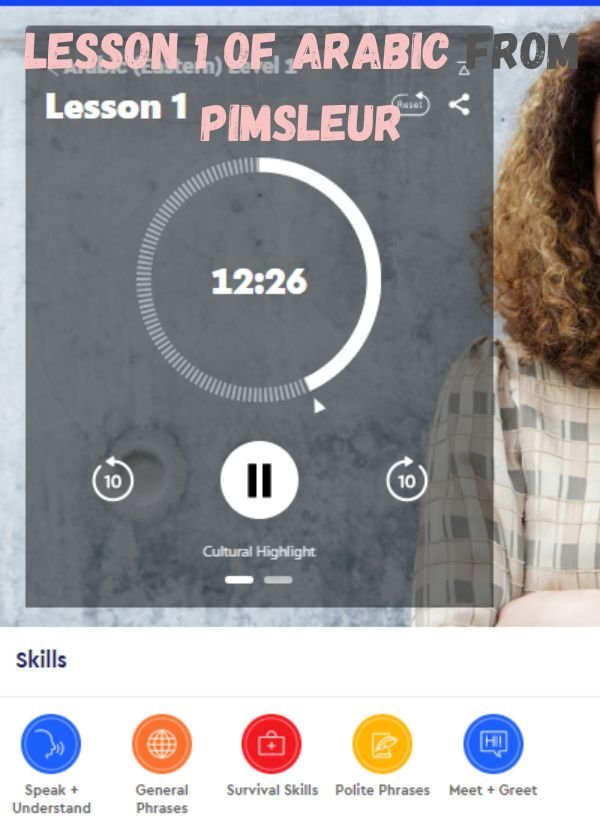
Pimsleur’s core mechanic is Graduated Interval Recall, a spaced-repetition system its founder, linguist Dr. Paul Pimsleur, developed to resurface vocabulary right before you’d naturally forget it. Each 30-minute lesson plays a short dialogue, breaks it into pieces, and asks you to recall and produce phrases out loud.
Based on our testing, this format works especially well for pronunciation and sentence rhythm. You’re not reading a translated word; you’re producing spoken language under light pressure, which mimics how conversations actually unfold.
Where it’s weaker is depth. Grammar rules are taught implicitly through repetition rather than explained directly, so learners who want to understand why a sentence is structured a certain way may come away confused.
Can You Really Learn Languages Through Them?
Yes, within limits. Pimsleur can take a complete beginner to a functional conversational level for travel, greetings, and everyday exchanges, particularly across the first one or two levels of a language.
It won’t get you to full fluency on its own. Reading fluency, formal writing, and nuanced grammar require supplementing with other resources, whether that’s a textbook, a tutor, or immersion content like podcasts and shows.
Think of Pimsleur as the foundation for spoken confidence rather than a complete curriculum. Pairing it with a conversation partner or an app like Duolingo for vocabulary breadth tends to produce faster overall progress.
In Which Things Pimsleur Falls Short
- ❌ Minimal grammar explanation, so rules are absorbed rather than taught directly
- ❌ Limited reading and writing practice compared with speaking practice
- ❌ Higher monthly cost than most competing language apps
- ❌ Some users report confusing cancellation steps and unexpected renewal charges
- ❌ Lesson content in older courses can feel dated in phrasing and scenarios
- ❌ No live human conversation practice built into the core plans
Pros of Pimsleur
- ✅ Builds real spoken fluency and pronunciation faster than most gamified apps
- ✅ Works fully offline, including hands-free mode for driving or commuting
- ✅ Backed by a genuinely research-based method, not just app-store trends
- ✅ Covers 51 languages, including several rarely offered elsewhere
- ✅ 7-day free trial lets you test the format before paying
- ✅ Syncs progress across devices, with CarPlay and Android Auto support
Is It Free or Paid?
Pimsleur is a paid service. There’s no permanent free tier, but every plan starts with a 7-day free trial that gives full access to test the method before committing.
There is one legitimate free route: many public libraries offer Pimsleur courses at no cost to cardholders, often through partner apps. It’s worth checking your local library’s digital catalog before subscribing.
Here’s a breakdown of current plans, based on pricing listed on Pimsleur’s official site as of mid-2026:
| Plan | Price | What’s Included |
| Premium (monthly) | $19.95/month | One language, core lessons, flashcards, quizzes |
| All Access (monthly) | $20.95/month | All 51 languages, same features as Premium |
| All Access (annual) | $164.95/year (often discounted the first year) | All languages, billed once a year |
| All Access (lifetime) | Around $475 one-time (regularly discounted) | Every language, no recurring payment |
| Single level purchase | $150 per level | One 30-lesson level, no subscription needed |
Pricing can vary slightly depending on whether you buy through the website, the App Store, or Google Play, and Pimsleur runs periodic promotions and student discounts.
What Pimsleur Provides to Its Users
- Core Conversational Lessons – 30-minute audio sessions built around real dialogue
- Reading Lessons – Optional script-based practice layered on top of speaking
- Speak Easy Challenge – Role-play exercises with transcripts to review
- Digital Flashcards – Vocabulary review outside the main lesson flow
- Skill-Building Tools – Quick Match and Speed Round games for reinforcement
- AI Voice Recognition – Feedback on pronunciation accuracy during speaking drills
- AI Conversation Coach (Beta) – Simulated conversation practice, currently rolling out for select languages like Latin American Spanish and French
- Offline Mode – Full lesson downloads for use without an internet connection
- Cross-Device Sync – Progress carries over between phone, tablet, and web
Is Pimsleur Worth Buying?
For learners whose main goal is speaking confidently and understanding native speakers, Pimsleur earns its price. The method is different enough from typical app-based drilling that it genuinely changes how quickly you start producing sentences.
For learners who want reading, writing, and detailed grammar instruction, or who are working with a tight budget, the value proposition weakens. You’ll likely need to pair Pimsleur with another resource regardless.
Compared with private tutoring, which commonly runs $40 to $100 per hour, Pimsleur is inexpensive. Compared with free or low-cost apps like Duolingo or Babbel, it’s a premium option that needs to earn its higher price through results.
Alternatives to Pimsleur
No single app covers every learning style, so it’s worth knowing how Pimsleur stacks up against three common alternatives.
| App | Approach | Starting Price |
| Duolingo | Gamified, bite-sized lessons covering vocabulary and basic grammar | Free, with a premium tier around $7/month |
| Babbel | Structured lessons combining vocabulary, grammar, and short dialogues | Around $10–$15/month |
| Rosetta Stone | Visual immersion method with picture-matching and speech recognition | Subscription pricing varies by term length |
Duolingo works best as a low-cost daily habit builder, especially for absolute beginners who want to stay motivated through streaks and mini-games.
Babbel sits in between Pimsleur and Duolingo, offering more grammar instruction than Pimsleur at a lower price, though with less emphasis on spoken repetition.
Rosetta Stone leans on visual association rather than audio recall, which suits learners who prefer connecting words to images over listening drills.
Other Post: Instant Checkmate Review
Final Verdict
Pimsleur delivers on its core promise: it teaches people to speak sooner than most language apps, through a method with real linguistic research behind it. The tradeoff is price and a lighter touch on reading, writing, and grammar theory.
If your priority is conversational confidence for travel, work, or family, and you’re comfortable supplementing with another resource for the rest, Pimsleur is a solid investment. If you’re on a tight budget or need a complete grammar-to-fluency curriculum, it’s worth trying the free trial before committing to a paid plan.
Frequently Asked Questions
Is Pimsleur good for beginners?
Yes. The method assumes no prior knowledge and builds vocabulary gradually through repetition and recall.
How long does it take to finish a Pimsleur level?
Each level has 30 lessons at roughly 30 minutes each, so daily use typically takes about a month per level.
Can I use Pimsleur offline?
Yes, lessons can be downloaded in advance and used without an internet connection.
Does Pimsleur teach reading and writing?
It offers optional reading lessons, but the core method focuses on listening and speaking rather than writing skills.
Is there a free version of Pimsleur?
There’s no permanent free plan, but a 7-day free trial is available, and some public libraries offer free access.
Sources & References
Pricing, feature details, and plan information were taken from the official Pimsleur website and app store listings as of September 2026, along with independent review platforms cited below.